Lift & Leveling Kits
Lift and leveling kits can change your truck’s stance, ground clearance, tire fitment, and overall appearance. Brown Service Center helps truck owners choose and install the right setup based on how the vehicle is driven, what upgrades are planned, and how much lift is actually needed.
If your tires are worn, damaged, aging, or no longer safe for the road, tire replacement may be the best option. Brown Service Center can help you find quality replacement tires that fit your vehicle, driving needs, and budget.
Tire Replacement
Toyo Tires
Toyo tires are a popular choice for drivers who want dependable handling, strong construction, and options for a variety of driving needs.
What Is the Difference Between a Lift Kit and a Leveling Kit?
A leveling kit mainly raises the front of a truck to reduce the factory rake, while a lift kit raises more of the vehicle to create additional ground clearance and a more dramatic stance.
The right choice depends on what you want from your truck. A driver who mainly wants a level appearance may not need the same setup as someone planning larger tires, added ground clearance, or more extensive suspension changes.
| Feature | Leveling Kit | Lift Kit |
|---|---|---|
| Primary Goal | Reduce front-to-rear rake | Raise the truck overall |
| Typical Change | Front-end height adjustment | More substantial suspension height |
| Appearance | More level factory stance | Taller, more aggressive stance |
| Tire Fitment | May allow certain larger tire sizes | Can provide room for larger wheel-and-tire combinations |
| Installation Complexity | Generally simpler | Usually more involved |
| Cost | Typically lower | Typically higher |
What Does Lift and Leveling Kit Service Include?
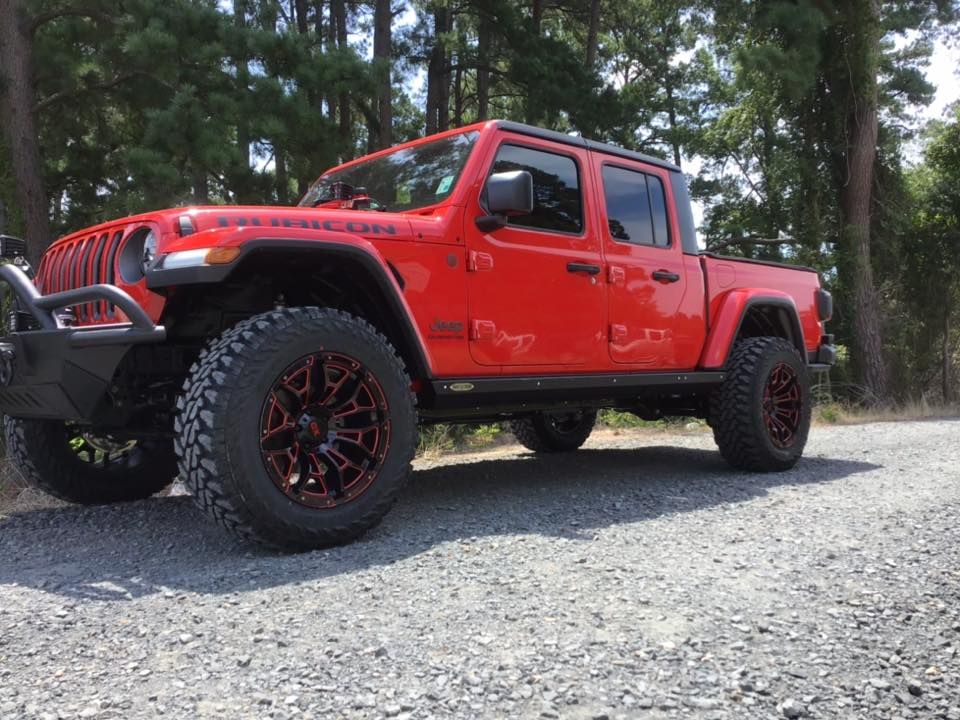
Lift and leveling kit service includes choosing a vehicle-compatible setup, installing the required components, checking fitment, and reviewing how the upgrade affects the rest of the truck.
Depending on the vehicle and kit, the project may involve:
- Leveling spacers or related components
- Shocks or struts
- Suspension lift components
- Control arms or correction hardware
- Steering-related components
- Wheel and tire fitment considerations
- Clearance checks
- Post-installation alignment needs
Not every truck requires every component. Brown Service Center looks at the specific vehicle and planned setup so the recommendation matches the truck rather than following a one-size-fits-all approach.
Caster
Caster refers to the forward or backward angle of the steering axis. Proper caster helps support steering stability, straight-line tracking, and the steering wheel’s ability to return toward center after a turn.
Why Would You Install a Lift or Leveling Kit?
Truck owners usually choose a lift or leveling kit to improve stance, add clearance, support wheel-and-tire upgrades, or build a truck that better fits the way they use it.
For a more level stance
Many trucks sit higher in the rear from the factory. A leveling kit can reduce that rake and give the truck a more balanced appearance.
For additional ground clearance
A suspension lift can increase clearance beneath parts of the vehicle, which may be useful for trucks driven on rough terrain or uneven surfaces.
For larger wheel and tire options
Changing ride height may create additional room for certain larger tire combinations. Tire clearance still depends on wheel width, offset, backspacing, tire size, and the specific truck.
For a more customized appearance
Lift and leveling kits can noticeably change the stance of a truck, making them a popular starting point for builds that also include custom wheels, tires, and other truck accessories.
How Much Do Lift and Leveling Kits Cost?
Lift and leveling kit costs vary because the kit, truck, lift height, installation time, and supporting upgrades can be very different from one build to another.
The final price can change based on:
- Truck make, model, and year: Suspension designs and required parts vary by vehicle.
- Leveling kit vs. lift kit: Leveling setups are generally simpler than full suspension lifts.
- Desired ride height: More lift can mean more components and additional installation work.
- Kit contents: Some kits include shocks, control arms, brackets, crossmembers, or other hardware.
- Existing suspension condition: Worn parts may need attention before or during installation.
- Wheel and tire plans: Larger tires or different wheel offsets can affect clearance and total project cost.
- Alignment requirements: Ride-height changes commonly require an alignment check after installation.
- Additional upgrades: Some builds may need supporting components depending on the vehicle and lift height.
Brown Service Center provides quotes based on the actual truck and desired setup rather than using one flat price for every installation.
How Does the Lift and Leveling Kit Process Work?
Brown Service Center starts by understanding the truck and the owner’s goals before recommending and installing a kit.
01
Discuss your goals
Brown Service Center starts with how you use the truck and what you want to change, whether that is stance, tire clearance, ground clearance, or overall appearance.
02
Review the truck and fitment
The team considers the vehicle, suspension design, planned lift height, wheel-and-tire setup, and other components that may affect fitment.
03
Choose the appropriate kit
Brown Service Center helps match the truck with a lift or leveling solution that fits the intended use instead of choosing height based on appearance alone.
04
Install the components
The kit is installed with attention to component placement, suspension geometry, clearance, and overall fit.
05
Check the finished setup
After installation, the truck is reviewed for clearance and other factors affected by the new ride height. An alignment may also be needed because changing suspension height can alter alignment angles.
How Do You Know Which Kit Your Truck Needs?
The right kit depends on your truck, how you drive it, the stance you want, and whether larger tires or other modifications are planned.
A leveling kit may be the better fit if:
- You mainly want to reduce the factory front-end rake
- You want a subtle change in stance
- You are considering a modest tire-size change
- The truck is primarily used for everyday driving
A lift kit may make more sense if:
- You want a noticeably taller stance
- Additional ground clearance is a priority
- Larger wheel-and-tire combinations are part of the build
- You want a more extensive suspension upgrade
Brown Service Center can review the complete plan before installation so the lift height, wheel setup, tire size, and suspension components work together.
Why Choose Brown Service Center for Lift and Leveling Kits?
Brown Service Center combines truck-accessory knowledge with automotive and suspension experience, helping customers plan an upgrade that makes sense as a complete vehicle setup.
Drivers choose Brown Service Center for:
- Professional lift and leveling kit installation
- Practical product recommendations
- Certified auto mechanics
- Detail-oriented workmanship
- Years of automotive experience
- Multiple truck upgrades available in one place
Frequently Asked Questions
What is better, a lift kit or a leveling kit?
A leveling kit is usually better for a mild stance correction, while a lift kit is better when greater ride height and ground clearance are the goal.
Leveling kits mainly address the factory rear-high stance by raising the front. Lift kits make a larger change and can involve more suspension components. Brown Service Center can recommend the better option based on the truck and planned upgrades.
Do I need an alignment after installing a lift or leveling kit?
Yes, an alignment check is generally recommended after changing suspension height.
Raising a truck can change toe, camber, and caster angles. Correct alignment helps the truck track properly and reduces the risk of uneven tire wear after the upgrade.
Can a lift or leveling kit let me install larger tires?
A lift or leveling kit may create room for larger tires, but ride height is only one part of proper tire fitment.
Tire diameter, width, wheel offset, backspacing, suspension components, and fender clearance all matter. Brown Service Center can help review the complete wheel-and-tire setup before recommending a kit.
Will a lift kit change how my truck drives?
Yes, changing ride height can affect handling, steering geometry, and the truck’s center of gravity.
How noticeable the change feels depends on the lift height, suspension design, shocks, tires, and other components. Choosing the right kit for the truck and intended use is important for maintaining predictable road manners.
Can Brown Service Center help with wheels and tires after a lift?
Yes. Brown Service Center offers lift and leveling kits along with tire services, custom wheels, wheel alignments, and other truck accessories.
Planning these upgrades together can make it easier to choose compatible lift height, tire size, wheel fitment, and alignment settings instead of treating each modification as a separate project.
Ready to Upgrade Your Truck?
Brown Service Center can help you choose a lift or leveling kit that fits your truck, your goals, and the rest of your planned upgrades. Get practical recommendations and professional installation from a team that understands both truck accessories and vehicle service..